MUSIC IS SIMPLE
I have always liked classical music. My mother was a music teacher, and is a gifted pianist, so I probably got it from her. At school I learned to play the recorder and the bassoon, and was in the school and county youth orchestras. I can potter about on the piano, though with bad technique.
For many of my schoolfriends, classical music was weird; how could you like Bach if you liked Black Sabbath, Elgar if you liked the Eagles? Yet listen closely and you'll find that many of the structures underlying all types of music are in fact very similar. They all use the same limited number of notes, the same chords and chord progressions, and the same rhythms (mainly 3/4 and 4/4). That is why other music traditions that use different notescales and odd rhythms, sometimes seem difficult. I remember when I lived in Lesotho going to see a touring bunch of Indian musicians. Their rhythms and harmonies sounded so odd to my ear, that I had to leave, I couldn't handle it.
To illustrate my point, listen to the following video by the Axis of Awesome, which was part of this year's Comic Relief Red Nose Day. It shows not only how many pop songs are written with the same four chords, but with the same four chords in exactly the same order.
http://www.youtube.com/watch?v=Lw3eYsnl31c
Enjoy. Then think about it the next time you listen to Mozart.
Walter Blotscher
Tuesday, 22 March 2011


Monday, 21 March 2011
LIBYA
I am worried about Libya. Unlike Iraq and Afghanistan, I am not yet at the point where I unreservedly think it was the wrong decision; but I'll state my worries nonetheless.
Although the coalition of the willing have (in contrast to Iraq) managed to get their legal ducks lined up this time round, the U.N. resolution empowering a no-fly zone and the protection of civilians is nonetheless to a certain extent vague. It specifically rules out the use of an "occupying force". Does that however allow for ground troops that have no intention of occupying Libya? Special forces sent to carry out hit and run raids spring to mind.
When politicians, with President Sarkozy in the forefront, start talking about "moral duty" and "historic decisions", I begin to get twitchy. We should remember that less than three months ago, France's apparent moral duty was to offer the support of its special forces to the Tunisian Government, so that it could better suppress peaceful demonstrators. Changing tack is not necessarily a bad thing; but there is a danger of hasty overreaction in the opposite direction.
Colonel Gadaffi is undoubtedly a bad man. But he is certainly not the only Government leader in this world, to whom one could attach that label. Why is the world not operating a no-fly zone in (say) Ivory Coast, which already has U.N. peacekeepers on the ground? Or Zimbabwe? Or Belarus? The answers to the last two are probably that it is not possible, and that Russia would veto any proposed U.N. resolution. Does that mean, then, that Libya is "on" simply because it can be done from Europe, and the Colonel is not liked enough for someone to raise a veto at the U.N.? And if that is true, why are we talking about morality, when really it is a question of practicalities?
There have already been casualties from Cruise missile and air attacks. Are these all nasty, die-hard supporters of the regime, or have we already seen the first signs of "collateral damage", the euphemism for innocents being caught in the crossfire. Will there be much more of that sort of thing? Yes, almost certainly. How much more could there be before our "moral duty" starts to look tarnished? Nobody knows. Or, at least, nobody is saying.
As in other wars, we don't know many of the details. Yet this is a crisis, so the 24-hour news networks have to cover it relentlessly, including interviews with military types - either current or former - who can explain exactly what an F16 can do to a tank column and how. What unnerves me is the way these guys (and they are always guys) light up when it comes to talking about firepower, they look a bit like I did when I was 7 years old and desperately wanted a Johnny 7 for Christmas. Is there anyone with a restraining finger on these various buttons, or is it all gung-ho?
Finally, what is the end-game in all of this? Air power will ensure that Colonal Gaddafi can't reconquer and terrorise the east of his country. But that might simply leave the two halves fairly entrenched, and ready to settle down for the sort of low-level civil war that has plagued other African countries for so many years; remember that Rwanda didn't require tanks and planes, machetes and clubs were enough. Such a status quo might be unacceptable to the coalition powers, particularly if it resulted in a steady trickle of refugees fleeing across the Mediterranean from the fighting. Is there a danger of mission creep here?
I don't have the answers to all of these questions. However, I do have the answer to one. Am I worried? You bet.
Walter Blotscher
Sunday, 20 March 2011
MILAN-SAN REMO
The spring cycling classics traditionally get underway with yesterday's Milan-San Remo, one of the five monuments, or hardest races. In terms of difficulty, "La Classicissima" doesn't have the cobblestones of the Tour of Flanders and Paris-Roubaix, or the hills of Liege-Bastogne-Liege and the Tour of Lombardy. What it does have are length (at 298km, it is by far the longest one-day race, longer even than the World Championships), and a couple of short, sharp climbs just before the finish that thin out the leading group. Most teams' strategy is to help their sprinter over those climbs, so they are there to contest the finish. Sprinters had won in seven of the last ten years, and were favourite to win again this time round.
It didn't work out that way. A crash some 90km before the finish split the peloton in two, with most of the sprinter favourites in the second group. Since the front group had 44 people in it, it was not possible to chase it down, so the bunch that reached the last climb, the Poggio, with 10km to go, had different sorts of riders in it. Coming into San Remo, that group had been whittled down to eight. Matthew Goss, a young Australian and the last recognised sprinter in it, took the win ahead of Fabian Cancellara and Phillipe Gilbert. Cancellara had won in 2008 with a time-trial attack in the last kilometre, but had to settle for second this time around.
All eyes now move to Belgium and northern France for the Tour of Flanders and Paris-Roubaix. Can Cancellara repeat his double from last year? That would certainly seal his reputation as one of the greatest cyclists of modern times. He is certainly in form, and I wouldn't put it past him.
Walter Blotscher
Saturday, 19 March 2011
MORE BELLS AND WHISTLES
My last IT-upgrade in January added a picture function on this blog. The eagle-eyed will have noticed more changes.
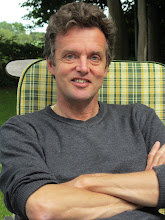
First, I have updated my profile, including a picture of myself, and adding a list of interests. I have "come out", as it were.
Secondly, I have joined Twitter, as you can see above. Not only that, but I have got my first Twitter followers. One of them I know; but with the other, I have absolutely no idea how they found their way to me, it is one of the mysteries of cyberspace. All the same, it was quite exciting.
My 16-year old (soon to be 17-year old) daughter, who has an unpaid job as one of my IT-advisers, tells me that Twitter is "nothing" in Denmark, Facebook is all. So I might just be being a pioneer.
Walter Blotscher
Friday, 18 March 2011
IVORY COAST (2)
While the world, through last night's Security Council resolution authorising a no-fly zone, appears to be doing something about the situation in Libya, a low-level civil war is going on in Ivory Coast. In my previous post on Ivory Coast in December, I said that it was important that international pressure be brought to bear on outgoing President Laurent Gbagbo, so that the winner of the recent election, opposition leader Alassane Ouattara, could take office. Although there have been lots of talks, including mediation by the African Union, Mr. Gbagbo has refused to budge. Meanwhile, his supporters are getting increasingly violent, provoking retaliation from those of Mr. Ouattara. More than 400 people have died since 28 November's disputed election, and an estimated 450,000 people driven from their homes. This is despite the fact that (in contrast to Libya) there are already 9,000 U.N. peacekeepers in the country, with a mandate to monitor the 2003 ceasefire, one of the pre-conditions that enabled the election to take place.
Various sanctions are in place against Mr. Gbagbo, and the West African central bank has handed over control of the national accounts to Mr. Ouattara. Without cash to pay supporters, particularly loyal units within the army, Mr. Gbagbo ought to be under pressure; yet there are rumours that other African "big men", notably President Jose dos Santos of Angola, are riding to his rescue by providing alternative resources. Whatever the truth of this, it is indisputably the case that Mr. Gbagbo has not yet stepped down, and that Mr. Ouattara spends most of his time holed up in a luxury hotel in Abidjan. A Government of national unity, though without Mr. Gbagbo himself, looks like the best way forward, and this plan has been approved by the African Union. But it hasn't happened yet.
The problems in Ivory Coast are probably at least as serious as those in Libya. Why then does one attract the world's attention while the other doesn't? "What's sauce for the goose is sauce for the gander" ought to be one of the guiding principles behind the way the United Nations works. Sadly, when it comes to events in sub-Saharan Africa (think Somalia, Rwanda, Congo), it doesn't seem to pan out that way.
Walter Blotscher
Thursday, 17 March 2011
DISAPPOINTING BOOKS
I have read a number of disappointing books during this first quarter of the year.
I really liked William Boyd's early novels, when they appeared at the beginning of the 1980's; A Good Man in Africa, An Ice-Cream War, and Stars and Bars. Brazzaville Beach, which appeared a decade later, was also good. Against that background, Ordinary Thunderstorms, a thriller about a man who inadvertently gets mixed up in shenanigans in the pharmaceutical industry and has to go underground in London, is rather pedestrian. It is also not half as good as John Le Carre's The Constant Gardener, which is on much the same theme.
Patricia Cornwell is a phenomenally successfully American writer of crime novels. Starting with Post Mortem in 1990, most of them feature Kay Scarpetta, a forensic scientist who tends to solve the various murders through detailed analysis of the crime scene and the victims' bodies. I had never read any of her twenty or so books, until my son picked up Book of the Dead in some airport bookshop. It was OK; but some of the forensic analysis went over my head, and I was never really gripped.
The Suspicions of Mr. Whicher, by Kate Summerscale, is a true story about the particularly brutal murder of a small child that took place at a country house in England in 1860. The case is historically interesting, since it was one of the first outside London investigated by the new phenomenon of "detectives", and as such, was covered extensively by the newspapers of the time, both local and national. The Metropolitan Police, the first in the country, was established for London by Sir Robert Peel in 1829; but it was not until 1842 that a small detective division was set up, with Jonathan Whicher one of the original eight members. He correctly worked out the identity of the murderer, the boy's elder half-sister, and how it had been done, but could not prove it in court (though she later entered a religious establishment and then confessed five years later). The combination of crime and history could have sparked together, but surprisingly fell a bit flat.
Finally, I didn't manage to get through Peter Ackroyd's book on Venice, perhaps my absolute favourite city. It takes quite a lot for me not to finish a book, once I have started it, and I loved Ackroyd's earlier novel Hawksmoor, so the disappointment was all the greater. Following on from his London: The Biography, Venice Pure City is written in the same sort of style, jumping around from one theme to another. I wish it had stayed still.
Good writing is difficult to define. I think it's just one of those things that you know when you see it. I have also just re-read Cormac McCarthy's No Country For Old Men after they showed the film on television. Now that is good writing.
Walter Blotscher
Wednesday, 16 March 2011
MY DAUGHTER'S COOKING
My wife is on an exchange visit with her school in Poland this week, so I am alone at home with my daughter.
It was her turn to cook this evening, though I did the shopping for the ingredients. She made a salmon lasagne, with leeks, carrots, onions, spinach, and a cheese and tomato topping. It was delicious.
She also made a very large portion. So that's what we'll be having when it's my turn to cook tomorrow night.
Walter Blotscher
Subscribe to:
Posts (Atom)