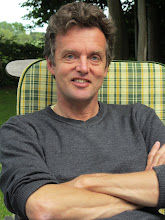
LENE ESPERSEN (2)
No sooner do I point out Lene Espersen's current political troubles on this blog than the Danish Conservative Party, of which she is the leader, is falling over itself to apologise to the electorate for her shortcomings.
Henriette Kjaer, the party's political spokeswoman (and de facto number 2), admitted over the weekend that the cost of being since 2001 the junior partner in the right of centre government has been a loss of distinctiveness for the Conservatives. Core voters have been "let down", and nobody now knows what the party stands for. All of which will now change. True, Lene Espersen was not mentioned by name. But if the expression "the buck stops with me" is to have any meaning, then she must bear a fair amount of responsibility for the current situation.
Does this mean that this blog is beginning to have political influence in Denmark? No. But what it does show is that Lene Espersen is fighting for her political life.
Walter Blotscher
Monday, 23 August 2010


Sunday, 22 August 2010
HUNG OVER
Yesterday I went to my neighbour's 60th birthday party lunch in the local village hall. It was all-male, started at 12.30, and finished in the wee hours.
I would like to write more about it, but won't for two reasons. First, I can't remember that much about it. Secondly, I am so dreadfully hung over that my eyeballs are hurting as I write this. I have to go and lie down for - yet another - nap.
Walter Blotscher
Yesterday I went to my neighbour's 60th birthday party lunch in the local village hall. It was all-male, started at 12.30, and finished in the wee hours.
I would like to write more about it, but won't for two reasons. First, I can't remember that much about it. Secondly, I am so dreadfully hung over that my eyeballs are hurting as I write this. I have to go and lie down for - yet another - nap.
Walter Blotscher
Friday, 20 August 2010
BEARDS IN SPORT
Have you noticed how some sports (well, men's sports) are more hirsute than others? You might think that, in principle, sportsmen would never have beards, since hair and sweat don't mix very well together. But that's not completely true.
Swimming and cycling seem to be completely beardless. Not only beardless, but hairless, as participants deliberately shave their legs and/or make themselves bald in order to improve the slipstream. So too are winter sports, I suppose in order to stop icicles from forming in the beard. Tennis is also pretty beard-free. Football has a lot of stubble; but genuine hair seems confined to various permutations of sideboards (nasty partial beards such as David Villa's don't really count). There is that Swedish defender Olof Mellberg, who has a full growth; but he always looks as if he has wandered in from a kick-around in the park with his grandchildren, so it is difficult to take it seriously.
Despite the helmets and the ice, ice hockey is relatively hairy. A lot of it is of the "I am not going to shave as long as we are in the play-offs" kind; but the strong Russian/East European contingent seems to favour a hairy chin. Rugby is also quite well represented. Perhaps it is something to do with sports in which you wear a lot of padding? The beard is a sort of facial pad.
There is however one sport which a) has no padding, b) no ice c) no helmets, yet d) has a lot of beards. That is handball. I don't know why; maybe the creosote on the balls is a natural folic fertiliser. My son, who is 19 and a handball goalie, has already grown a beard. It's not bad; not as good as Olof Mellberg, but way better than David Villa. When it's got to maximum strength, I'll ask him why.
Walter Blotscher
Have you noticed how some sports (well, men's sports) are more hirsute than others? You might think that, in principle, sportsmen would never have beards, since hair and sweat don't mix very well together. But that's not completely true.
Swimming and cycling seem to be completely beardless. Not only beardless, but hairless, as participants deliberately shave their legs and/or make themselves bald in order to improve the slipstream. So too are winter sports, I suppose in order to stop icicles from forming in the beard. Tennis is also pretty beard-free. Football has a lot of stubble; but genuine hair seems confined to various permutations of sideboards (nasty partial beards such as David Villa's don't really count). There is that Swedish defender Olof Mellberg, who has a full growth; but he always looks as if he has wandered in from a kick-around in the park with his grandchildren, so it is difficult to take it seriously.
Despite the helmets and the ice, ice hockey is relatively hairy. A lot of it is of the "I am not going to shave as long as we are in the play-offs" kind; but the strong Russian/East European contingent seems to favour a hairy chin. Rugby is also quite well represented. Perhaps it is something to do with sports in which you wear a lot of padding? The beard is a sort of facial pad.
There is however one sport which a) has no padding, b) no ice c) no helmets, yet d) has a lot of beards. That is handball. I don't know why; maybe the creosote on the balls is a natural folic fertiliser. My son, who is 19 and a handball goalie, has already grown a beard. It's not bad; not as good as Olof Mellberg, but way better than David Villa. When it's got to maximum strength, I'll ask him why.
Walter Blotscher
Thursday, 19 August 2010
IRAQ
With the departure of the last U.S. combat brigade from the country, the Iraq War has entered the end-game. 50,000 soldiers will remain until the end of 2011, but they are merely supposed to advise and train the local Iraqi forces. The war, as a war, is supposedly over.
It is easy to see why this has happened. With the war in Afghanistan not going well, Barack Obama was keen, if not desperate, to honour his election campaign promise to have all combat troops out of Iraq by 31 August this year. He will also want to honour his predecessor's agreement with the Iraqi Government to have absolutely everybody out of Iraq by the end of next year.
But is this such a good idea? There are many straws in the wind that suggest that the end of the Iraq War - as understood by foreigners - is merely the beginning of a new, internal conflict.
- the commander of the Iraqi Army, who in 2007 (i.e. before the "surge") had said that he expected that U.S. forces could leave in 2008, now says that the Iraqi Army will not be fully ready to take over security until 2020. What happens between 31 December 2011 and then?
- there are still many cases of extreme violence. Just two days ago, a suicide bomb outside an army recruiting office in Baghdad killed around 60 people. Two weeks ago, a series of explosions in Basra killed at least 43 people and wounded 185. And so on. In a Western country, any one of these incidents would provoke huge amounts of navel-gazing, political discussion, Government initiatives, and press comment; in Iraq, it is, sadly, part of daily life.
- most worryingly of all, the elections in March have still not resulted, five months later, in the formation of an Iraqi Government.
Despite the uncertainties, today is probably not a bad point in time at which to do a rough balance sheet of the war, some 7,5 years after it started. On the plus side, some bad guys (Saddam Hussein, his sons, relatives and cronies) were removed. And a system of democracy was introduced (though, as can be seen above, it is not functioning properly, and may well still collapse over the division of oil revenues and autonomy for the Kurds). On the minus side, around 100,000 Iraqi civilians have died, plus 4,415 U.S. soldiers, and hundreds from other countries. An awful lot of people have been injured, many for life. And the whole thing has cost more than US$1 trillion, of which only a tiny part can remotely considered as productive investment.
The likes of George W. Bush and Tony Blair will doubtless say that it was a price worth paying, indeed that it was necessary in order to preserve the free world's way of life. I disagree; and not just because it is not them who had to pay that price. To my mind, it was a colossal waste of human and financial resources, that demonstrated all that is wrong with the modern world; the lack of true checks and balances in today's states, the invoking of near religious certainty into political decisions, the hubris of leaders, and the corruption of power. The one good thing that might have come out of it was a commitment never to do such a thing again; sadly, that is precisely the one thing that in my view will not come out of it.
Walter Blotscher
With the departure of the last U.S. combat brigade from the country, the Iraq War has entered the end-game. 50,000 soldiers will remain until the end of 2011, but they are merely supposed to advise and train the local Iraqi forces. The war, as a war, is supposedly over.
It is easy to see why this has happened. With the war in Afghanistan not going well, Barack Obama was keen, if not desperate, to honour his election campaign promise to have all combat troops out of Iraq by 31 August this year. He will also want to honour his predecessor's agreement with the Iraqi Government to have absolutely everybody out of Iraq by the end of next year.
But is this such a good idea? There are many straws in the wind that suggest that the end of the Iraq War - as understood by foreigners - is merely the beginning of a new, internal conflict.
- the commander of the Iraqi Army, who in 2007 (i.e. before the "surge") had said that he expected that U.S. forces could leave in 2008, now says that the Iraqi Army will not be fully ready to take over security until 2020. What happens between 31 December 2011 and then?
- there are still many cases of extreme violence. Just two days ago, a suicide bomb outside an army recruiting office in Baghdad killed around 60 people. Two weeks ago, a series of explosions in Basra killed at least 43 people and wounded 185. And so on. In a Western country, any one of these incidents would provoke huge amounts of navel-gazing, political discussion, Government initiatives, and press comment; in Iraq, it is, sadly, part of daily life.
- most worryingly of all, the elections in March have still not resulted, five months later, in the formation of an Iraqi Government.
Despite the uncertainties, today is probably not a bad point in time at which to do a rough balance sheet of the war, some 7,5 years after it started. On the plus side, some bad guys (Saddam Hussein, his sons, relatives and cronies) were removed. And a system of democracy was introduced (though, as can be seen above, it is not functioning properly, and may well still collapse over the division of oil revenues and autonomy for the Kurds). On the minus side, around 100,000 Iraqi civilians have died, plus 4,415 U.S. soldiers, and hundreds from other countries. An awful lot of people have been injured, many for life. And the whole thing has cost more than US$1 trillion, of which only a tiny part can remotely considered as productive investment.
The likes of George W. Bush and Tony Blair will doubtless say that it was a price worth paying, indeed that it was necessary in order to preserve the free world's way of life. I disagree; and not just because it is not them who had to pay that price. To my mind, it was a colossal waste of human and financial resources, that demonstrated all that is wrong with the modern world; the lack of true checks and balances in today's states, the invoking of near religious certainty into political decisions, the hubris of leaders, and the corruption of power. The one good thing that might have come out of it was a commitment never to do such a thing again; sadly, that is precisely the one thing that in my view will not come out of it.
Walter Blotscher
Wednesday, 18 August 2010
BLOGGING AND IT
This blog has from today a new function, a link to previous episodes. If, for instance, I want to refer to Monday's blog on Yoghurts With Bits, I simply write Yoghurt With Bits with this funny underlining, and you, dear reader, can go directly to it merely by clicking on it.
I should say up-front, that I did not work this out on my own, but had to use the IT-skills of my elder son (who, incidentally, was the person who set this blog up in the first place). I sent him an E-Mail asking him if he could sort it out. Being under the age of 25, he quite obviously could.
However, the process was not completely painless. He thought he could show me how to do it by ringing me up on the phone and talking me through it. This was overoptimisitic, to say the least. The fundamental problem was that he did not grasp, did not understand, just could not get his brain around the concept of, how much of an IT-moron I am. He kept on referring to basic concepts I did not know, and I could hear his frustration in my ear, every time I said "hang on a minute". In the end, he rang off, wrote the whole thing down in a Word file entitled "How to insert a link in a blog for dummies" and sent it to me by E-Mail. That worked.
It is the bane of every generation, I think, to find that the previous generation has difficulties with new technology. My mother has never used a computer in her life, and never will. I can use them; but I still have residual fears of crashing, and it is only recently that I have dared to have two programmes open and running simultaneously. For my children, computers and other gadgets are merely an extension of their bodies, like fingertips. When cars first appeared, people used to run in front of them with a red flag in order to warn pedestrians. In discussions with my children about IT, I often feel like the man with the red flag; namely, a bit of a prat.
Anyway, we may not have knowledge or skills, but this older generation sure has stubborn staying power. So I will now go through the whole of this blog, and do all of the appropriate links. Even if it does take me a while.
Walter Blotscher
This blog has from today a new function, a link to previous episodes. If, for instance, I want to refer to Monday's blog on Yoghurts With Bits, I simply write Yoghurt With Bits with this funny underlining, and you, dear reader, can go directly to it merely by clicking on it.
I should say up-front, that I did not work this out on my own, but had to use the IT-skills of my elder son (who, incidentally, was the person who set this blog up in the first place). I sent him an E-Mail asking him if he could sort it out. Being under the age of 25, he quite obviously could.
However, the process was not completely painless. He thought he could show me how to do it by ringing me up on the phone and talking me through it. This was overoptimisitic, to say the least. The fundamental problem was that he did not grasp, did not understand, just could not get his brain around the concept of, how much of an IT-moron I am. He kept on referring to basic concepts I did not know, and I could hear his frustration in my ear, every time I said "hang on a minute". In the end, he rang off, wrote the whole thing down in a Word file entitled "How to insert a link in a blog for dummies" and sent it to me by E-Mail. That worked.
It is the bane of every generation, I think, to find that the previous generation has difficulties with new technology. My mother has never used a computer in her life, and never will. I can use them; but I still have residual fears of crashing, and it is only recently that I have dared to have two programmes open and running simultaneously. For my children, computers and other gadgets are merely an extension of their bodies, like fingertips. When cars first appeared, people used to run in front of them with a red flag in order to warn pedestrians. In discussions with my children about IT, I often feel like the man with the red flag; namely, a bit of a prat.
Anyway, we may not have knowledge or skills, but this older generation sure has stubborn staying power. So I will now go through the whole of this blog, and do all of the appropriate links. Even if it does take me a while.
Walter Blotscher
Tuesday, 17 August 2010
GEOGRAPHICAL IMPRESSIONS
I firmly believe that maps influence us. The fact that north is "up", south is "down", for instance.
(T'was not ever thus; mediaeval maps had east at the top, since Jerusalem/the Holy Land was the most important place in Christendom, and that was to the east. Seen from Europe, of course ...)
I was reminded of this when reading this week's Economist. On page 27, there was a 7cm x 5,5cm map of Israel and Palestine together. The West Bank is only about 50-60km wide; from Tel Aviv to the West Bank is even less, perhaps 30km. The whole of the Gaza Strip, home to 1,5 million people, is only 360 sq km, roughly 30km x 10km. When you put the facts down like that, it is easy to imagine a conflict in the area, irrespective of the history of the Israeli state and its wars with its neighbours. When there is simply not that much land to go round, then every olive grove takes on an increased importance.
On the next page, there was a slightly smaller map, this time of Sudan and its neighbours in Africa. Sudan is the continent's largest country, all 2,5m sq km of it, so the area shown by the map was vast. The province of Darfur, much in the news of late, accounts for roughly a fifth of Sudan, and is almost as large as France. It is about 1,400 times the size of the West Bank, yet has only 4 times as many people. When you put the facts down like that, it becomes absurd to think that the U.N.'s peacekeeping force of 22,000 can make the region secure. After all, nobody would try to secure France with just 22,000 soldiers; and Darfur has almost no infrastructure to help them move around.
As citizens of relatively small, well-organised Western European countries, we find it difficult to appreciate on the one hand the vast size, and consequent logistical problems, of some countries (eg Russia); and on the other, the intense population pressures in parts of the world (eg Bangladesh's 150million people crowded into an area about the same size as Ireland). It is true that all maps - including the Economist's - have a scale factor in the corner. But how many of us really look at that, particularly if it's on a TV screen? Perhaps we should.
Walter Blotscher
I firmly believe that maps influence us. The fact that north is "up", south is "down", for instance.
(T'was not ever thus; mediaeval maps had east at the top, since Jerusalem/the Holy Land was the most important place in Christendom, and that was to the east. Seen from Europe, of course ...)
I was reminded of this when reading this week's Economist. On page 27, there was a 7cm x 5,5cm map of Israel and Palestine together. The West Bank is only about 50-60km wide; from Tel Aviv to the West Bank is even less, perhaps 30km. The whole of the Gaza Strip, home to 1,5 million people, is only 360 sq km, roughly 30km x 10km. When you put the facts down like that, it is easy to imagine a conflict in the area, irrespective of the history of the Israeli state and its wars with its neighbours. When there is simply not that much land to go round, then every olive grove takes on an increased importance.
On the next page, there was a slightly smaller map, this time of Sudan and its neighbours in Africa. Sudan is the continent's largest country, all 2,5m sq km of it, so the area shown by the map was vast. The province of Darfur, much in the news of late, accounts for roughly a fifth of Sudan, and is almost as large as France. It is about 1,400 times the size of the West Bank, yet has only 4 times as many people. When you put the facts down like that, it becomes absurd to think that the U.N.'s peacekeeping force of 22,000 can make the region secure. After all, nobody would try to secure France with just 22,000 soldiers; and Darfur has almost no infrastructure to help them move around.
As citizens of relatively small, well-organised Western European countries, we find it difficult to appreciate on the one hand the vast size, and consequent logistical problems, of some countries (eg Russia); and on the other, the intense population pressures in parts of the world (eg Bangladesh's 150million people crowded into an area about the same size as Ireland). It is true that all maps - including the Economist's - have a scale factor in the corner. But how many of us really look at that, particularly if it's on a TV screen? Perhaps we should.
Walter Blotscher
Monday, 16 August 2010
YOGHURT WITH BITS
As I write this with my right hand, I am idly spooning yoghurt into my mouth with my left. But not just any old yoghurt. This is a German 4-Korn yoghurt, produced abroad but sold here in Netto for kr.2.95 a throw (a throw being a sizeable 250g).
Apart from the range of interesting flavours - blood orange/pineapple (which this one is), strawberry/rhubarb, muesli - what I really like are the small corn bits that you can chew, and which occasionally get stuck between your teeth. As I said to my daughter, these yoghurts are both scrumptious and wicked.
With such a good product, you would think that the manufacturer's name would be plastered all over the packaging. But no. I eventually found it, tucked away in very, very small print; J. Bauer GmbH & Co, from Wasserburg, near Munich. Well done, them.
Walter Blotscher
As I write this with my right hand, I am idly spooning yoghurt into my mouth with my left. But not just any old yoghurt. This is a German 4-Korn yoghurt, produced abroad but sold here in Netto for kr.2.95 a throw (a throw being a sizeable 250g).
Apart from the range of interesting flavours - blood orange/pineapple (which this one is), strawberry/rhubarb, muesli - what I really like are the small corn bits that you can chew, and which occasionally get stuck between your teeth. As I said to my daughter, these yoghurts are both scrumptious and wicked.
With such a good product, you would think that the manufacturer's name would be plastered all over the packaging. But no. I eventually found it, tucked away in very, very small print; J. Bauer GmbH & Co, from Wasserburg, near Munich. Well done, them.
Walter Blotscher
Subscribe to:
Posts (Atom)