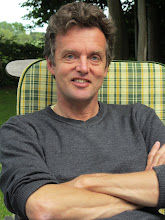
MOVEMBER (2)
I promised pictures of how my November moustache would turn out. The students opted for a Pancho Villa Mexican-style moustache, plus sideburns.
I look dreadful, I know; as my wife succinctly put it, "you look a complete prat". But it is in a good cause, and only for 10 more days.
Walter Blotscher
Monday, 18 November 2013
Saturday, 16 November 2013
A BIG FINE (2)
J.P.Morgan is busily settling all over the place.US$5.1 billion with the U.S. housing regulator, and US$4.5 billion to investors, who bought its mortgage securities. The proposed US$13 billion settlement with the Justice Department will be finalised soon.
US$22 billion and counting. And this is just in respect of one business in one country. Incredible.
Walter Blotscher
J.P.Morgan is busily settling all over the place.US$5.1 billion with the U.S. housing regulator, and US$4.5 billion to investors, who bought its mortgage securities. The proposed US$13 billion settlement with the Justice Department will be finalised soon.
US$22 billion and counting. And this is just in respect of one business in one country. Incredible.
Walter Blotscher
Friday, 15 November 2013
A REVOLUTION
A revolution is going on in Denmark. Not on the streets, but in the voting booths.
The cause is the Friday evening programme "Vild Med Dans" ("wild about dance"), the Danish equivalent of Strictly Come Dancing, and in particular the performance of Allan Simonsen. Simonsen, now 60, was a very good Danish football player in the 1970's and 1980's. In 1977, he was chosen as European footballer of the year, ahead of Kevin Keegan, even though Keegan's Liverpool had beaten Simonsen's Borussia Mönchengladbach in the final of that year's European Cup. Simonsen remains the only Scandinavian to have won the award.
Sportspeople are usually good at the dance format, being fit, naturally competitive, and in control of their bodies. The cricketers Mark Ramprakash and Darren Gough have won in the U.K.; and the shotputter Joachim B. Olesen and skier Sophie Fjellvang-Sølling have won here. But there's a problem with Simonsen, he can't dance for toffee. He makes me look positively elegant, something my daughter would think was nigh on impossible.
Normally, the judges go easy on people who are really bad. But Simonsen was so bad that the exasperated experts ended up being rather rude. That in turn provoked a reaction, which has spread like wildfire on social media such as Facebook and Twitter; no matter how bad Simonsen is, vote for him. Since the rules of the programme mean that viewers' SMS's carry more weight than the views of the judges, it means that Simonsen has cruised through round after round, even though he can't dance at all. More talented, and more obviously talented, contestants have had to leave.
I haven't watched this year's series, since apart from Simonsen, I hadn't heard of any of the other contestants. But I note that the Danish revolution continues; after tonight's programme, he is through to the semi-final.
Danish commentators see in all this a desire by Mr. and Mrs. Average Dane to give the powers-that-be a good kicking, a desire that is not confined to dance programmes. The local elections on Tuesday look like producing similar results.
Walter Blotscher
A revolution is going on in Denmark. Not on the streets, but in the voting booths.
The cause is the Friday evening programme "Vild Med Dans" ("wild about dance"), the Danish equivalent of Strictly Come Dancing, and in particular the performance of Allan Simonsen. Simonsen, now 60, was a very good Danish football player in the 1970's and 1980's. In 1977, he was chosen as European footballer of the year, ahead of Kevin Keegan, even though Keegan's Liverpool had beaten Simonsen's Borussia Mönchengladbach in the final of that year's European Cup. Simonsen remains the only Scandinavian to have won the award.
Sportspeople are usually good at the dance format, being fit, naturally competitive, and in control of their bodies. The cricketers Mark Ramprakash and Darren Gough have won in the U.K.; and the shotputter Joachim B. Olesen and skier Sophie Fjellvang-Sølling have won here. But there's a problem with Simonsen, he can't dance for toffee. He makes me look positively elegant, something my daughter would think was nigh on impossible.
Normally, the judges go easy on people who are really bad. But Simonsen was so bad that the exasperated experts ended up being rather rude. That in turn provoked a reaction, which has spread like wildfire on social media such as Facebook and Twitter; no matter how bad Simonsen is, vote for him. Since the rules of the programme mean that viewers' SMS's carry more weight than the views of the judges, it means that Simonsen has cruised through round after round, even though he can't dance at all. More talented, and more obviously talented, contestants have had to leave.
I haven't watched this year's series, since apart from Simonsen, I hadn't heard of any of the other contestants. But I note that the Danish revolution continues; after tonight's programme, he is through to the semi-final.
Danish commentators see in all this a desire by Mr. and Mrs. Average Dane to give the powers-that-be a good kicking, a desire that is not confined to dance programmes. The local elections on Tuesday look like producing similar results.
Walter Blotscher
Thursday, 14 November 2013
ELECTION PRESSURE
The Danish papers today are full of the word Im, the name of a cute 7-year old girl, who was deported to Thailand on Sunday. Im and her mother are both Thai, and came to Denmark four years ago (i.e. when Im was three) because her mother married a Danish man. Unfortunately, that man died of cancer in May 2012. Thereafter, a series of authorities and courts have decided that the mother and daughter have a greater attachment to Thailand than to Denmark, and so should be sent back there. Which has now happened.
The sight on prime-time television of a cute little girl, who has spent nearly all of her life in Denmark and speaks fluent Danish, crying at the airport on the way to a country she barely knows, and all (and only) because her dad died unexpectedly, has provoked a strong reaction from the average Dane, particularly on social media. Normally politicians are hard-hearted about this sort of thing; but there are local elections next Tuesday, and no political party wants to be seen to be callous in the week leading up to them. In the space of 24 hours, the Justice Minister went from saying that nothing could be done, through the law could be changed but only for future cases, to the law could be changed with retrospective effect, but only if all political parties agreed. This last was a challenge to the right-wing and anti-immigrant Danish People's Party to put down a veto and take the consequences. But the DPP avoided the trap, and signed up.
Everybody said that they were merely closing a loophole in the law, namely hard cases caused by a premature death; Im is only one of 4 or 5 similar cases who will now be rescued and allowed to come back to Denmark. However, in the way of these things, people started to dig; and it turns out that there could be up to 1,000 cases over the past years, where foreigners have been quietly deported the death of the Dane. As I say, politicians are normally hard-hearted; but as I also say, there are elections next week.
Walter Blotscher
The Danish papers today are full of the word Im, the name of a cute 7-year old girl, who was deported to Thailand on Sunday. Im and her mother are both Thai, and came to Denmark four years ago (i.e. when Im was three) because her mother married a Danish man. Unfortunately, that man died of cancer in May 2012. Thereafter, a series of authorities and courts have decided that the mother and daughter have a greater attachment to Thailand than to Denmark, and so should be sent back there. Which has now happened.
The sight on prime-time television of a cute little girl, who has spent nearly all of her life in Denmark and speaks fluent Danish, crying at the airport on the way to a country she barely knows, and all (and only) because her dad died unexpectedly, has provoked a strong reaction from the average Dane, particularly on social media. Normally politicians are hard-hearted about this sort of thing; but there are local elections next Tuesday, and no political party wants to be seen to be callous in the week leading up to them. In the space of 24 hours, the Justice Minister went from saying that nothing could be done, through the law could be changed but only for future cases, to the law could be changed with retrospective effect, but only if all political parties agreed. This last was a challenge to the right-wing and anti-immigrant Danish People's Party to put down a veto and take the consequences. But the DPP avoided the trap, and signed up.
Everybody said that they were merely closing a loophole in the law, namely hard cases caused by a premature death; Im is only one of 4 or 5 similar cases who will now be rescued and allowed to come back to Denmark. However, in the way of these things, people started to dig; and it turns out that there could be up to 1,000 cases over the past years, where foreigners have been quietly deported the death of the Dane. As I say, politicians are normally hard-hearted; but as I also say, there are elections next week.
Walter Blotscher
Wednesday, 13 November 2013
EXPENSIVE TRINKETS
Two objects sold for eye-watering prices today.
Yesterday in New York, a tryptich painting by Francis Bacon of his friend and fellow artist Lucian Freud was sold for a whopping US$142 million. While in Geneva today a diamond called the Pink Star went for a slightly less huge US$83m.
Both were sold at auction, a structure which can drive up prices; but even so. The thing about these two trinkets is that you can't do anything with them, you can only look at them. And my problem is that I just can't imagine getting US$100 million worth of satisfaction from looking at anything.
Walter Blotscher
Two objects sold for eye-watering prices today.
Yesterday in New York, a tryptich painting by Francis Bacon of his friend and fellow artist Lucian Freud was sold for a whopping US$142 million. While in Geneva today a diamond called the Pink Star went for a slightly less huge US$83m.
Both were sold at auction, a structure which can drive up prices; but even so. The thing about these two trinkets is that you can't do anything with them, you can only look at them. And my problem is that I just can't imagine getting US$100 million worth of satisfaction from looking at anything.
Walter Blotscher
Tuesday, 12 November 2013
POPULATION GROWTH
Most European countries are predicted to have shrinking populations over the next 50 to 100 years. This will give problems, as there are fewer people of working age to take care of all of those pensioners.
One exception is the United Kingdom, whose population is growing and is predicted to continue to do so. Indeed, within a generation the U.K. will become the most populous country in the E.U., overtaking Germany, whose population is already shrinking. Whether that makes the Brits more amenable to Europe, is however, doubtful.
What is driving this growth is not the Brits themselves, but immigrants of one kind or another. The number of Brits has been stable since the beginning of the 1990's at around 52 million, but the number of non-native residents has gone up from 4.3 million in 1995 to 13.4 million in 2001. Many of these are from other European countries, Poland for instance.
Immigrants tend to do jobs that natives don't want to do; a London household without a Polish cleaner or plumber would be an oddity. However, they also increase pressure for housing on what is already a very crowded country. One of the reasons why the property market in the south east barely noticed the financial crisis in 2008.
That pressure is also contributing to a backlash against foreigners in all forms. With Bulgarians and Romanians eligible to come to the U.K. next year, British society is going to face challenges in the coming decades.
Walter Blotscher
Most European countries are predicted to have shrinking populations over the next 50 to 100 years. This will give problems, as there are fewer people of working age to take care of all of those pensioners.
One exception is the United Kingdom, whose population is growing and is predicted to continue to do so. Indeed, within a generation the U.K. will become the most populous country in the E.U., overtaking Germany, whose population is already shrinking. Whether that makes the Brits more amenable to Europe, is however, doubtful.
What is driving this growth is not the Brits themselves, but immigrants of one kind or another. The number of Brits has been stable since the beginning of the 1990's at around 52 million, but the number of non-native residents has gone up from 4.3 million in 1995 to 13.4 million in 2001. Many of these are from other European countries, Poland for instance.
Immigrants tend to do jobs that natives don't want to do; a London household without a Polish cleaner or plumber would be an oddity. However, they also increase pressure for housing on what is already a very crowded country. One of the reasons why the property market in the south east barely noticed the financial crisis in 2008.
That pressure is also contributing to a backlash against foreigners in all forms. With Bulgarians and Romanians eligible to come to the U.K. next year, British society is going to face challenges in the coming decades.
Walter Blotscher
Monday, 11 November 2013
CLEARING UP
I have been clearing up after the storm a couple of weeks ago. Chopping up the two trees that fell over in the garden, and sweeping up endless wheelbarrow-loads of leaves.
Not clearing up in the same way as (say) people in the Philippines have been doing. But it's still cold, wet, hard work, and I will be glad when it's finished.
Walter Blotscher
I have been clearing up after the storm a couple of weeks ago. Chopping up the two trees that fell over in the garden, and sweeping up endless wheelbarrow-loads of leaves.
Not clearing up in the same way as (say) people in the Philippines have been doing. But it's still cold, wet, hard work, and I will be glad when it's finished.
Walter Blotscher
Subscribe to:
Posts (Atom)
.jpg)
.jpg)